
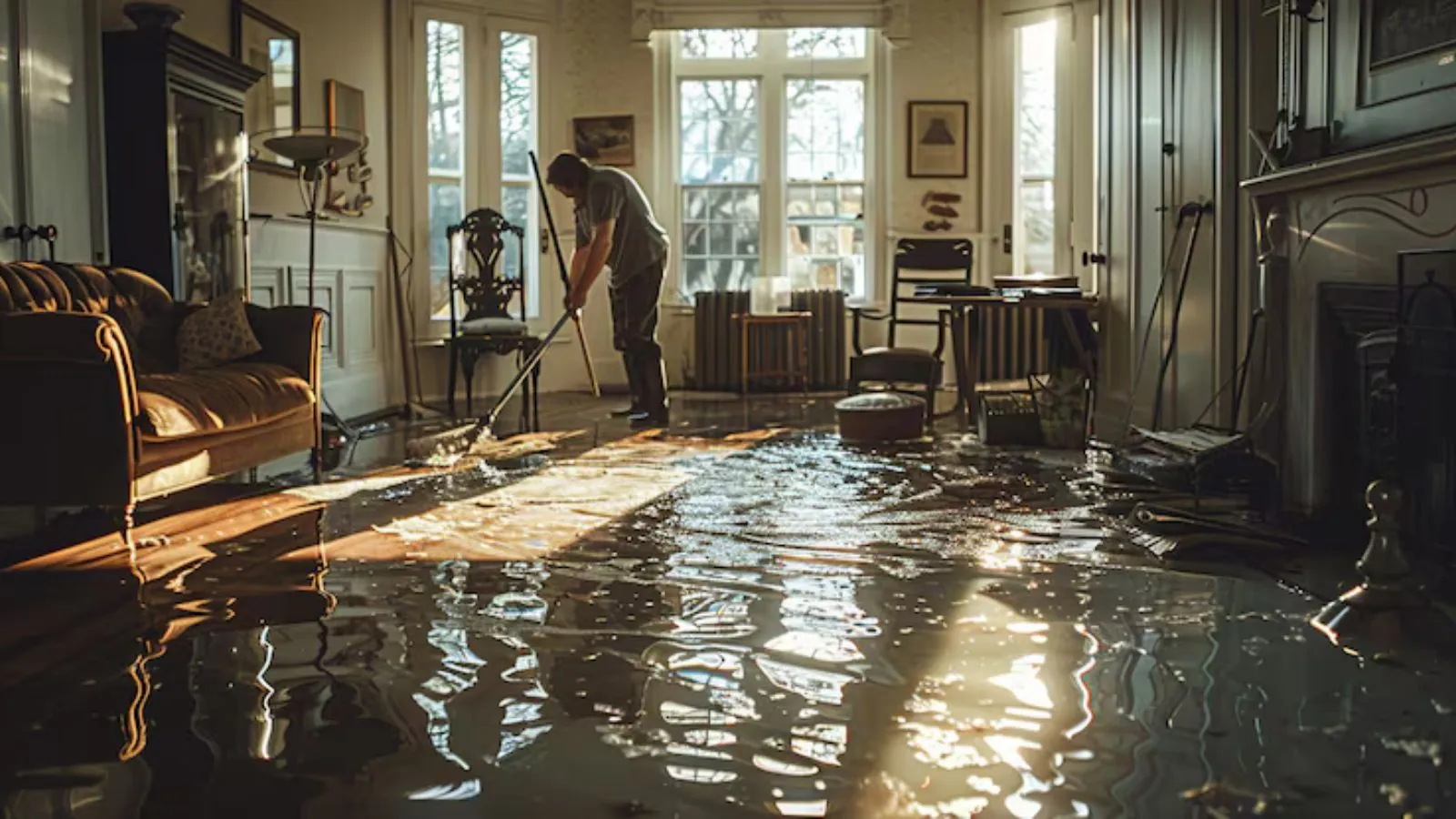
Emergency water extraction is the first job on most Bayside water losses. Pumps and extraction units pull standing water off floors and out of carpet before it soaks into drywall, subfloors and framing. This page covers removing water that is on the floor right now, and drying what stays wet is a separate step with its own page on structural drying and dehumidification.
Callers describe it in plain terms. Ankle-deep water in a laundry room that started this morning, a bathroom leak that brought a ceiling down, or water that has been sitting for three or four days. Whatever the cause, the sooner water leaves the building, the fewer materials have to be replaced.
Which water extraction situation do you have?
| Situation | What it usually means | First move |
|---|---|---|
| Ankle-deep water in a laundry room or bathroom | A supply line, drain or appliance is still feeding the water | Close the shut-off at that fixture, then call the 24/7 line |
| Water that has sat for several days | Materials are saturated and the water may no longer be clean | Keep people and pets out and ask for an assessment of the water category |
| Water in a basement after heavy rain | Groundwater or a failed sump pump, sometimes a sewer backup | Stay off wet floors near outlets and read about basement cleanup |
| Water in a yard or around a pool | Exterior water, not a building loss | That is a different service and we do not pump yards |
When standing water is an emergency
Standing water is an emergency when it is still rising, when it reaches outlets or the electrical panel, or when it came up a drain. Call the 24/7 line first and the dispatcher will tell you what to shut off while a crew is arranged. Do not wade into water that may be near live wiring, and call 911 or the utility about any electrical or gas risk before you call a restoration company.
Stop the source
Close the shut-off valve at the fixture, or the main water valve if a pipe is feeding the flood.
Power first
Turn off power to wet areas only if you can reach the panel while standing on a dry surface.
Lift valuables
Move electronics, papers and furniture legs out of the water. Wet upholstery stains quickly.
Keep clear
Keep children and pets away from water that came from a drain, toilet or sewer.
How water extraction works
The crew starts with a moisture check so the extraction is aimed at where the water went, not only at what you can see. Portable and truck-mounted extraction units remove the standing water, and weighted wand tools draw water out of carpet and pad. Hard floors get squeegee passes and wet vacuums before any drying equipment goes in.
Extraction removes the bulk of the water but it does not dry the structure. Water left in wall cavities and under floors keeps wicking upward, which is why air movers, LGR dehumidifiers and daily moisture readings follow. Skipping that step is how a dry-looking floor ends up cupped weeks later.
Standing water now? Call the 24/7 line.
Call (833) 521-1033Pump-out of a flooded basement or ground floor
Basements and ground-floor rooms get a controlled pump-out. When groundwater is part of the problem, the crew considers how fast to lower the water level instead of emptying a soaked space all at once. If you suspect the water came up a floor drain or from a backed-up line, tell the dispatcher at the start, because sewage changes the plan and has its own page on sewage backup cleanup.
What water extraction does not cover
We work on water that has entered a building. Pumping a yard, a pond or a backyard pool is a different service, and so are waterproofing and foundation inspection. Restoration repairs the damage after the water is out, and a waterproofing contractor addresses why it came in.
Water extraction in Bayside homes
The same extraction call looks different from one Bayside building to the next. In a single-family house it is often a basement or a ground-floor leak. In a garden apartment complex or a co-op, water can travel through a ceiling into the unit below, so the crew checks downstairs before it leaves. Along Bell Boulevard and Northern Boulevard, shops and apartments share walls, and the extraction plan has to account for the neighbors.
Insurance and documentation
Photograph the water line on walls and furniture before extraction starts, and keep receipts for emergency steps. The New York State Department of Financial Services tells policyholders to document losses before cleaning up and to file as soon as possible. It also advises that permanent repairs wait until the insurer has inspected, so our written scope separates extraction from rebuilding.
The standard that defines the first steps
The first hours of a water loss are described in ANSI/IICRC S500, the published standard for water damage restoration. It sets out the water categories, which run from clean water to grossly contaminated water, and it ties the response to the category. Extraction comes before drying, and the category decides what can be kept.
Where we extract water
Crews working from Bayside take extraction calls across the neighborhood and in nearby towns.
What affects the cost of water extraction
Extraction is priced by the work involved, not by a flat figure. The factors below decide the scope that we write up after the assessment.
| Factor | How it changes this job |
|---|---|
| Volume and depth | More water and deeper water mean more pump time and more passes with the extraction units. |
| Water category | Clean water is simpler. Water from a drain or sewer adds sanitizing and removal of porous materials. |
| Access | Basement stairs, long hose runs and tight spaces slow the job. |
| Time standing | Water that sat for days has soaked deeper and may need more removal. |
| Follow-on drying | Extraction is followed by equipment days and moisture readings, which are scoped separately. |
Ask for the scope in writing. Your real number comes from the on-site assessment, so call (833) 521-1033 to start one.
Common questions
How long does water extraction take?
A single room can often be pumped out in a few hours, while a flooded basement takes longer. The volume of water and access set the timeline, and drying after extraction usually runs several days.
Can I use my own wet vacuum?
A household wet vacuum helps with a small spill, but it cannot keep up with a flooded room. Never use one on sewage or in water near electrical hazards. Extraction units move far more water and let the crew check moisture afterward.
Will I need to leave my home?
Often not for clean water from a supply line. If the water is contaminated, if power must be off or if the damage is widespread, the crew will tell you which rooms to stay out of.
Do you pump out yards, pools or window wells?
No. We extract water that has entered a building. Exterior pumping is a different service.
Do you handle water extraction emergencies at night or on weekends in Bayside?
Yes. The phone line is open 24/7, including nights and weekends. Call, describe where the water is, and the dispatcher will tell you what to shut off while the crew is arranged.