
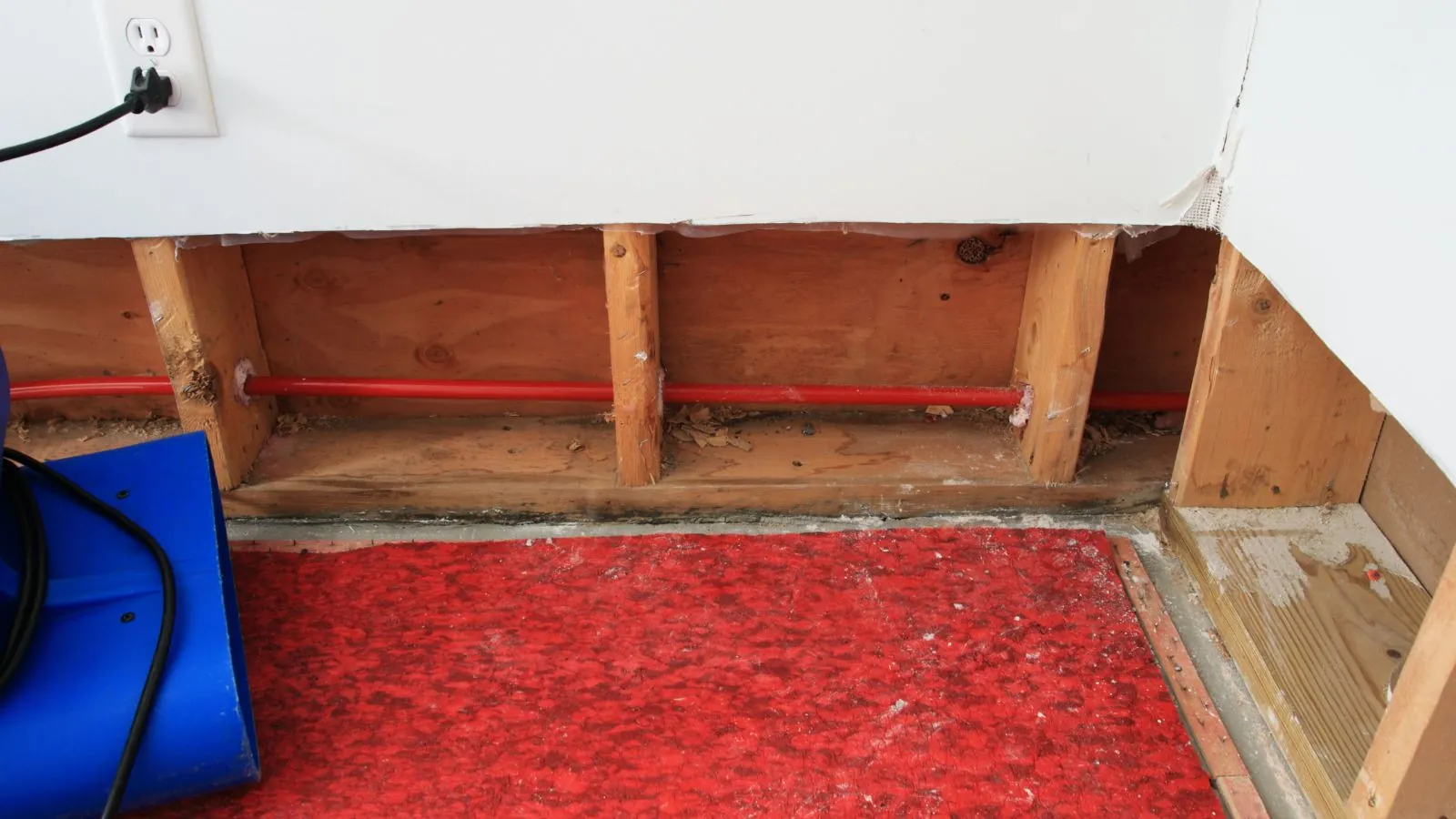
Carpet water damage restoration depends on two things: how long the carpet was wet and what kind of water it was. Clean water from a supply line can often be extracted and dried if it is caught quickly. Water from a drain, a sewer or a flood is another matter, and carpet that took in contaminated water is normally removed.
The pad under carpet is the real problem. It absorbs a great deal of water and dries slowly, so even if the carpet surface dries, the pad can stay wet and breed odor. The crew checks the pad, the tack strip and the subfloor, not only the top.
Save it or replace it?
| Situation | Usual outcome | Why |
|---|---|---|
| Clean water, caught quickly | Carpet often dries in place, pad may be replaced | Clean water does less harm if extracted fast |
| Clean water that sat for days | Pad replaced, carpet case by case | Long wet time breeds odor and weakens materials |
| Gray or black water | Carpet and pad removed | Contamination cannot be fully cleaned from porous materials |
| Water from a neighbor's leak above | Depends on water type and time | The source decides the category |
Wet carpet and pad
Carpet is made of fibers over a backing, and the pad beneath is a foam that holds many times its weight in water. A closet carpet soaked by a leak next door, a hallway that took water from a failed appliance or a basement carpet after rain all follow the same path. The water spreads across the pad, wicks into the tack strip and reaches the subfloor.
Callers often say the carpet and the pad are completely in water. That description tells the crew to check the subfloor and the wall base as well.
How carpet is extracted and dried
Extraction removes as much water as possible using weighted tools that press water out of the carpet and pad. The carpet is then lifted at a corner, the pad is removed or dried, and air movers and dehumidifiers dry the subfloor and the back of the carpet. Moisture readings show when each layer is dry.
Pad is usually inexpensive to replace compared with the time it takes to dry. That is why the scope often removes it even when the carpet is saved.
Carpet and pad soaked? Call the 24/7 line.
Call (833) 521-1033When carpet has to go
Carpet is replaced when the water was contaminated, when it stayed wet too long or when the backing has delaminated. Carpet over a wet slab or subfloor is also at risk because moisture keeps rising. The scope lists carpet, pad and tack strip separately so you can see what is being replaced and why.
Carpet damage from different sources
A neighbor's sprinkler or leak, a burst line, a washer or an overflowing tub can each wet carpet. Source matters for the category. See burst pipe water damage for pressurized lines and flood damage cleanup for water that came from outside.
Carpet in Bayside apartments and homes
Bayside apartments and co-ops often have carpeted bedrooms and closets. A leak from the unit above is common, and the owner or management should be told. HPD tenant guidance tells tenants to contact the owner first, follow up in writing and document attempts. In houses, basement carpet after heavy rain is a common call.
Insurance and documentation
Photograph the wet carpet and the source, and keep a sample of the carpet and pad if asked. Many policies cover sudden water events and treat long-term leaks differently. Ask your insurer what your policy says before you discard anything.
The standard behind the decision
Whether carpet and pad can be saved is not a matter of opinion. ANSI/IICRC S500 describes water categories and the drying approach for each, and carpet cushion that has absorbed gray or black water is generally removed instead of dried. We describe the standard here so you can ask any contractor which category they believe applies and why.
Where we serve
Carpet water damage calls come from Bayside and the neighborhoods around it.
What affects the cost of carpet restoration
Carpet jobs hinge on water type and time. These are the factors.
| Factor | How it changes this job |
|---|---|
| Water category | Contaminated water means removal, clean water may allow drying. |
| Time wet | Long exposure raises the chance of replacement. |
| Pad and subfloor | Pad is usually replaced, subfloor is dried. |
| Area | More square footage means more equipment. |
| Rebuild scope | New carpet, pad and tack strip are scoped separately. |
Ask for the scope in writing. Your real number comes from the on-site assessment, so call (833) 521-1033 to start one.
Common questions
Can I save my carpet after a leak?
If the water was clean and the carpet was extracted fast, often yes. Contaminated water means replacement.
Why is the pad replaced?
Pad absorbs a lot of water and dries slowly. Replacing it is usually the faster, safer choice.
What if my carpet smells musty?
That usually means moisture is still in the pad or the subfloor. Readings find where.
Do you do carpet cleaning?
We handle water damage. Cleaning after drying is a separate service.