
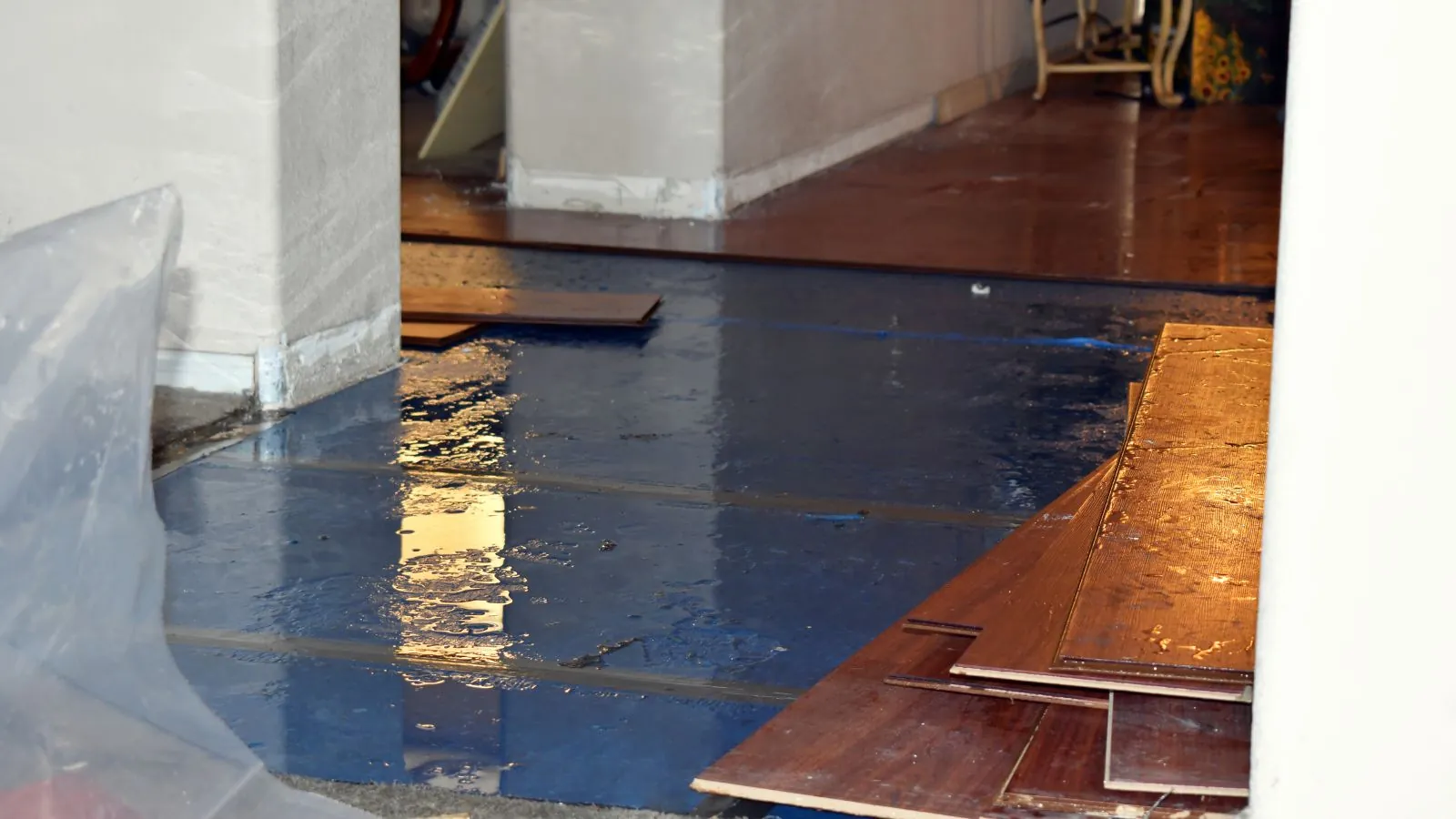
Slab leak water damage happens when a supply line under or inside a concrete slab leaks and pushes water up through cracks, joints and flooring. It is a trade term many homeowners do not know. What they know is that a floor is damp and no pipe above it is leaking.
A slab leak is a plumber's diagnosis and repair, often using leak detection equipment and sometimes breaking the slab. Our work is the water damage on the surface: extraction, drying and repair of the flooring and walls. Whether your house sits on a slab, over a basement or over a crawl space is on your plans, and we do not claim that slabs are common in any one part of Bayside.
Signs of a leak under a slab
| Sign you notice | What it can mean | Next step |
|---|---|---|
| Warm spot on a floor | A hot water line leaking beneath | Shut off the water heater and call a plumber |
| Sound of running water with all fixtures off | A pressurized line is leaking | Shut the main water valve and listen again |
| Sudden rise in the water bill | Water is going somewhere | Check the meter with all fixtures off and call a plumber |
| Damp flooring or baseboards with no visible pipe | Water rising through the slab | Call the 24/7 line for moisture readings |
A damp floor and no visible pipe: what to do first
If a floor is damp and you cannot see where water is coming from, shut the main water valve and check whether the dampness stops spreading. A plumber can pressure-test the lines to find a leak under the slab. Call the 24/7 line when the water is already on flooring, and call 911 or the utility if wet flooring is near electrical equipment.
Shut the main
If the damp spot stops growing, a supply line is the likely source.
Check the meter
With every fixture off, a moving meter dial points to a leak.
Protect the floor
Move rugs, furniture and boxes off the damp area.
Photograph
Take dated photos of the damp spot, the baseboard and any staining.
What the water does when it rises through a slab
Water from a slab leak travels through hairline cracks and expansion joints. It wets the underside of flooring, the bottom plate of walls and the baseboards, and it often smells musty before anything looks wet. Engineered wood and laminate swell, and carpet pad holds water for a long time.
The crew uses moisture meters and thermal imaging to find the wet area and checks the edge of the wall, where moisture tends to hide. Flooring that is wet at the back is often removed so the slab can dry.
Damp floor and no obvious pipe? Call the 24/7 line.
Call (833) 521-1033Drying a floor over a slab
Concrete holds moisture a long time. Drying uses air movers and LGR dehumidifiers, and sometimes floor drying panels, and readings continue until the slab and the materials above it reach dry standard. Installing new flooring over a damp slab is a common mistake, so the scope tells you when it is safe to proceed.
Slab leak and plumber: who does what
A plumber finds and fixes the leak. Replacing plumbing in New York City is performed by a Licensed Master Plumber, according to the Department of Buildings. We coordinate with the plumber so drying starts as soon as the line is shut off. For general line breaks, see burst pipe water damage.
Slab leaks and your water bill
A hidden leak often shows first on the bill. NYC DEP's leak forgiveness program has a window of 120 days from the original high bill to fix the leak, so call a plumber promptly. Keep the repair receipt, because DEP asks for a plumber's receipt when the meter has no working automated reading device.
Insurance and documentation
A hidden leak that has gone on for a long time is often treated differently from a sudden break. Photograph the damage, keep the plumber's report and ask your insurer what your policy covers, including whether it addresses the cost of reaching the pipe.
Where we respond
Slab leak calls are taken around the clock from Bayside and the towns next to it.
What affects the cost of slab leak water damage
Finding and fixing the leak is the plumber's work. For the water damage, these factors matter.
| Factor | How it changes this job |
|---|---|
| How long it leaked | Long-running leaks soak more flooring and walls. |
| Flooring type | Wood and laminate often need removal, tile may only need drying. |
| Slab drying | Concrete dries slowly, so equipment days can run longer. |
| Wall bases | Bottom plates and baseboards may need removal and drying. |
| Rebuild scope | Flooring, trim and paint are scoped separately. |
Ask for the scope in writing. Your real number comes from the on-site assessment, so call (833) 521-1033 to start one.
Common questions
What is a slab leak in plain words?
It is a leak in a water line under or inside the concrete floor slab. The water rises through cracks and wets flooring from below.
How do I know it is not a roof or an appliance?
A floor that is damp from below with no appliance or pipe above it is a clue. A plumber can pressure-test the lines to confirm.
Can you dry a concrete slab?
Yes, with dehumidification and airflow, and sometimes floor drying equipment. Readings tell us when it is dry enough for new flooring.
Is a slab leak covered by insurance?
Policies differ. Some cover the resulting damage but not the pipe itself. Ask your insurer.
Do you handle slab leak water damage emergencies at night or on weekends in Bayside?
Yes. The line is open 24/7. If you hear water running with nothing on, shut the main valve and call.