
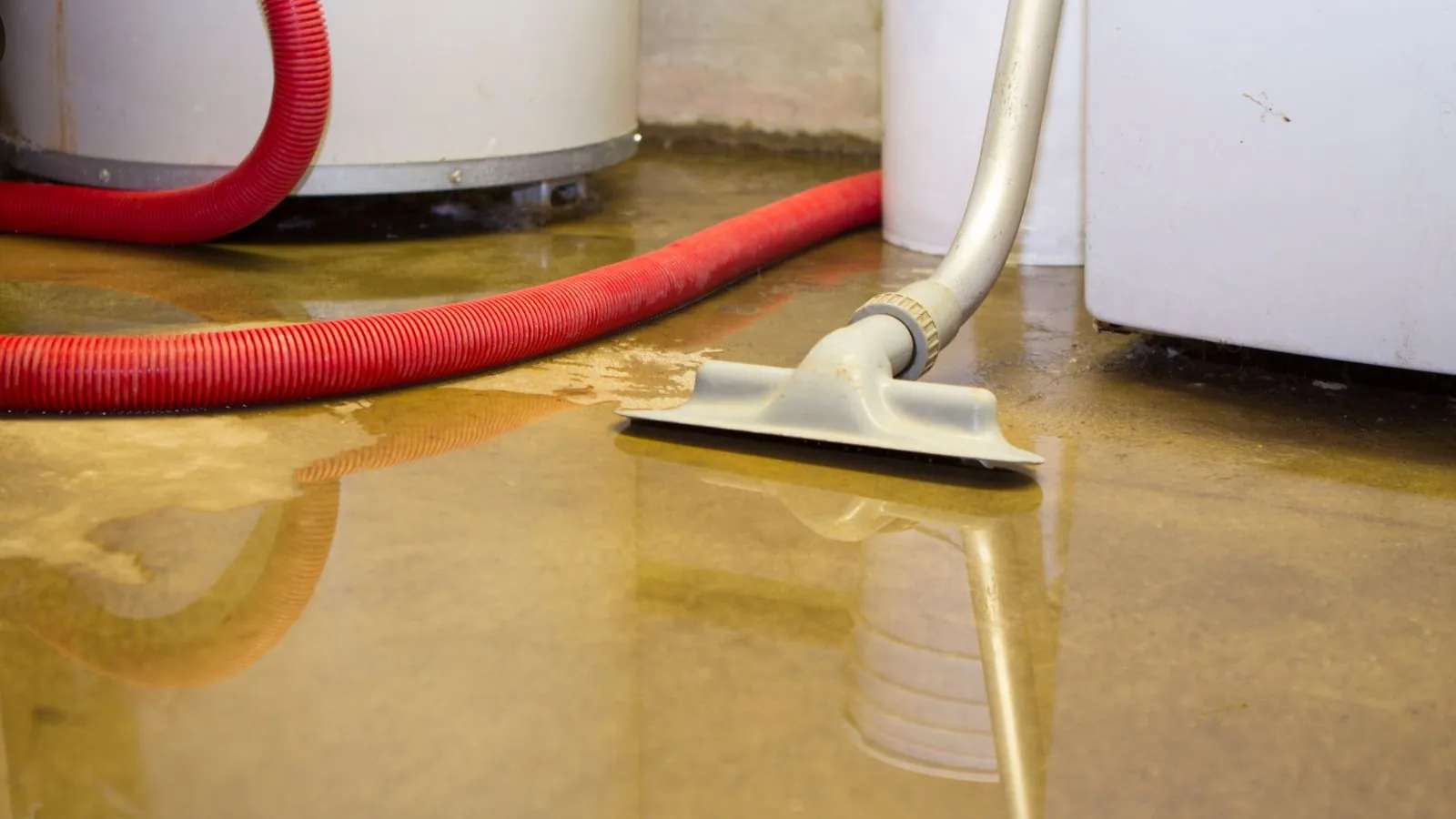
Appliance leak water damage almost always starts at a hose, a valve or a drain line, not at the machine itself. A washer supply valve that breaks can run until someone shuts it, a dishwasher inlet can drip under the cabinet for weeks, and a refrigerator ice-maker line can spread quietly behind the unit.
This page covers the appliance as the source. Damage to cabinets and the sink area is covered on kitchen water damage restoration, and the floors that take the water are covered under hardwood floor water damage and carpet water damage. Keep each page's scope in mind, and call the 24/7 line if more than one applies.
Appliance leaks: where water comes from
| Appliance | Common failure | Where the water goes |
|---|---|---|
| Dishwasher | Inlet hose, door seal or drain line | Under the unit, into cabinet bases and the subfloor |
| Washing machine | Supply valve or hose, overflow | Across the laundry room and through the floor below |
| Refrigerator | Ice-maker or water dispenser line | Behind the unit, into flooring and walls |
| Water filter or softener | Fitting or housing crack | Along the wall and into the floor |
When an appliance leak is an emergency
An appliance leak becomes an emergency when water is still running or when it has reached another floor. Close the shut-off valve behind or beside the appliance, or the main water valve if you cannot find it. Unplug the appliance only if the outlet is dry. Do not step into water near outlets, and call 911 or the utility about any electrical risk. Then call the 24/7 line.
Close the valve
Appliance shut-offs are usually behind or beside the unit.
Unplug carefully
Only pull the plug from a dry outlet, never while standing in water.
Check below
In a multi-story building, look for water on the ceiling of the unit below.
Photograph
Take photos of the failed hose, the valve and the wet floor before cleanup.
Why appliance leaks hide
Many appliance leaks are slow. A dishwasher seal that weeps a cup per cycle will wet the subfloor for months before a stain appears. By then the cabinet base may be swollen, the flooring cupped and the subfloor discolored. Moisture meters and thermal imaging find those hidden areas so the scope is complete.
A leak found after a short run might dry with air movers and dehumidifiers. A leak that has run long often needs cabinet and flooring removal. The assessment shows which one you have.
Appliance leaking? Call the 24/7 line.
Call (833) 521-1033Washer valve and hose failures
A washer supply valve that fails can flood a laundry room within minutes. The water runs across the floor, into the walls and often through the floor into a ceiling below. If you have a leak like that, the crew checks the rooms underneath and uses extraction first, then dries walls and subfloor. Callers often describe a washer valve that broke while they were away for a few days.
Leaks in Bayside apartments
In garden apartment complexes and apartments above Bell Boulevard shops, an appliance leak is often a neighbor's problem as well. Tell the owner or management right away. The NYC HPD tenant guidance recommends contacting the owner or managing agent, then following up in writing with a registered letter, and documenting every attempt before filing a complaint.
Insurance and documentation
Sudden failures of hoses and valves are often covered by homeowners and renters policies, and long-term seepage often is not. Photograph the failed part, the label and the damage. Keep the part if you can, because an adjuster may ask to see it.
Safety steps before any cleanup
Appliance leaks often sit close to outlets, cords and the appliance itself. According to ANSI/IICRC S500, the published standard for water damage restoration, the first job is to identify the water type and the hazards before anyone starts removing materials. Clean supply water from a washer hose is a different case from gray water from a dishwasher drain.
- Unplug the appliance only if the cord and outlet are dry and you are not standing in water.
- Turn off the power at the panel if water has reached outlets, switches or the appliance's wiring.
- Close the shut-off valve for the appliance, or the main valve if you cannot find it.
- Do not run a household vacuum on standing water.
- Keep children and pets out of the wet room until the water is removed.
Where we respond
Appliance leak calls are answered around the clock for Bayside and its neighbors.
What affects the cost of appliance leak cleanup
These factors set the scope after assessment. Replacing the appliance or the hose is separate.
| Factor | How it changes this job |
|---|---|
| How long it leaked | A slow weep over weeks does different damage than a flood in minutes. |
| Cabinets and flooring | Particleboard cabinet bases and laminate flooring swell and often need replacing. |
| Subfloor | A wet subfloor adds drying time and sometimes removal. |
| Floors below | Water that reached another floor adds rooms to the scope. |
| Rebuild scope | Cabinet, flooring and drywall repairs are scoped separately. |
Ask for the scope in writing. Your real number comes from the on-site assessment, so call (833) 521-1033 to start one.
Common questions
How can I tell if my dishwasher is leaking slowly?
Look for a soft spot in the floor beside the unit, a musty smell, or staining on the cabinet base. A moisture meter finds what the eye misses.
What if the leak came from my neighbor's washer?
Tell the owner or management right away, document the damage and ask about their insurance. We assess and dry your unit, and the scope helps sort responsibility.
Is my refrigerator leak covered by insurance?
Sudden failures are often covered, but policies differ. Ask your insurer and keep the failed part.
Do you repair the appliance?
No. We handle the water damage. An appliance technician or plumber fixes the machine or the line.
Do you handle appliance leak water damage emergencies at night or on weekends in Bayside?
Yes. The line is open 24/7. If a washer or dishwasher floods at night, close the valve, keep clear of wet outlets and call.