
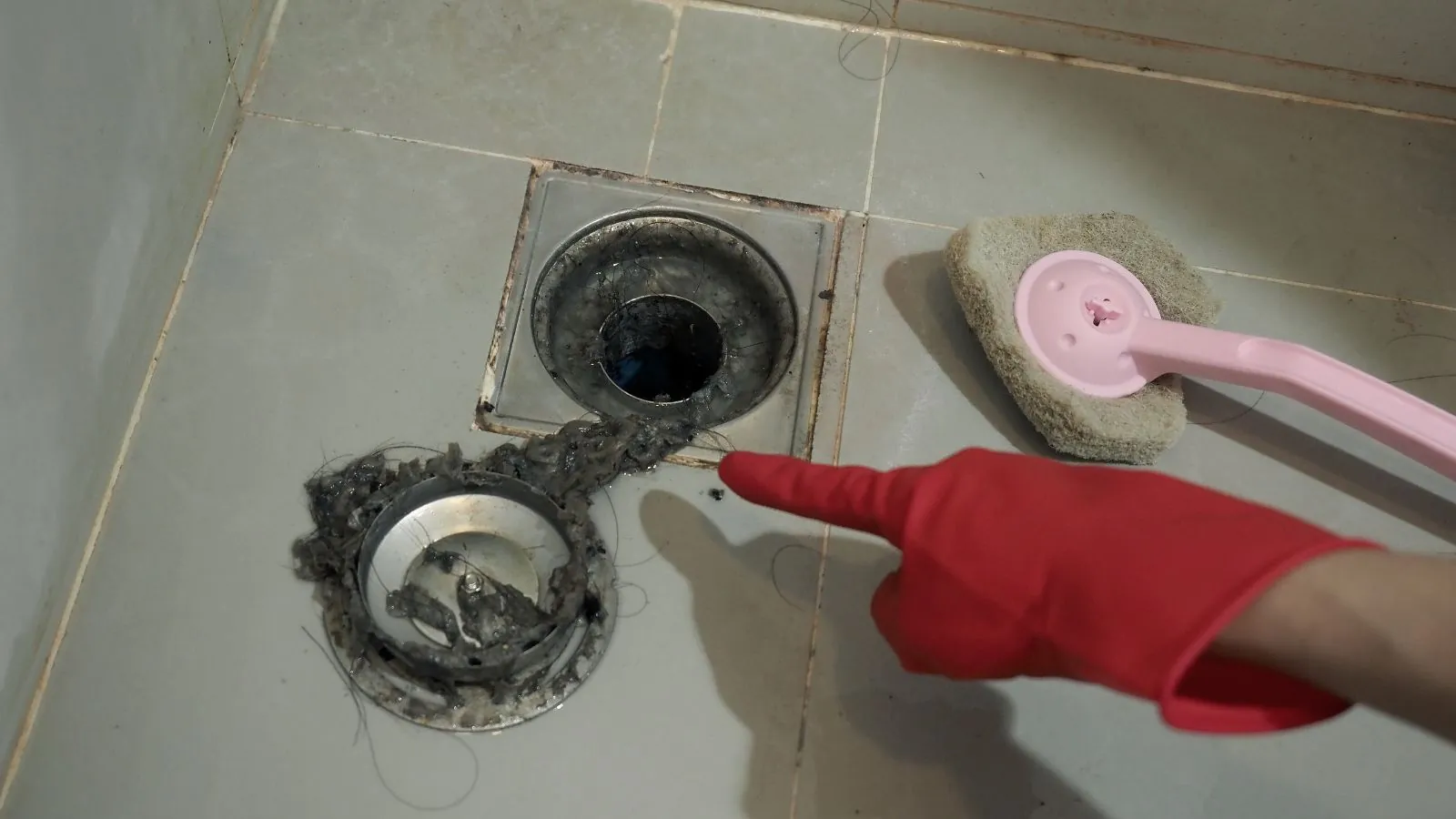
Sewage backup cleanup deals with Category 3 water, which is grossly contaminated and can carry bacteria and viruses. It is not a job for household fans, a shop vacuum or a bucket and mop. The crew wears protective equipment, removes porous materials that touched the water, cleans and sanitizes the area and dries what remains.
A basement drain that backs up with raw sewage is the classic call, but toilets and tubs can back up as well. Because the water is not clean, the first decision is what has to be removed. That decision is made on site, using the S500 standard for Category 3 losses.
Sewage backup: what to do and what not to do
| Do | Do not | Why |
|---|---|---|
| Keep people and pets out of the area | Walk through or play in the water | It can carry bacteria and viruses |
| Stop using drains and toilets | Flush or run water | More water can feed the backup |
| Call the 24/7 line and report to 311 | Try to clean it with a household vacuum | A vacuum can spread contamination |
| Photograph before anything is moved | Throw out items before documenting | Insurers expect documentation |
Sewage backup: what to do first
Keep everyone out of the affected area and stop using sinks, tubs and toilets so more water does not enter the line. Do not touch the water, and do not run a household vacuum. If the water is near outlets, the panel or appliances, treat it as an electrical hazard and call 911 or the utility. Call the 24/7 line next.
Stay out
Raw sewage can carry bacteria and viruses. Keep children and pets away.
Stop using water
Do not flush or run taps while the line is backing up.
No household vacuum
A wet vacuum or fan can spread contamination through the house.
Report it
Report a suspected sewer backup to NYC 311 so DEP can inspect the City side.
Who handles which part
NYC DEP asks that any observed or suspected sewer backup be reported through 311, and a DEP crew inspects the site. The property owner is responsible for the private sewer line between the house and the City sewer. A plumber clears or repairs that line, and DEP checks the City side. Our crews handle the inside: extraction, removal, sanitizing and drying.
Sewage in your home? Call the 24/7 line.
Call (833) 521-1033How sewage cleanup is done
The crew extracts the contaminated water first, then removes carpet, pad and drywall that absorbed it. Hard surfaces are cleaned and treated with antimicrobial products, and the structure is dried with air movers and dehumidifiers. Items are sorted into those that can be cleaned and those that must be discarded.
Porous materials that touched sewage are not reused. That is a safety rule, not an upsell, and it is the main reason this job looks more like demolition than a leak.
What causes sewer backups
DEP says wet weather backups, when stormwater overwhelms sewer pipes, are now the most common type of sewer backup in the City. In dry weather, blockages are usually the cause, and grease is the leading one, followed by wipes and similar items. Roots in a private line are another cause. A plumber can tell you which applies to your line.
Insurance, claims and sewage
The New York State Department of Financial Services notes that standard homeowners policies typically do not cover flood damage, and that sewage back-up caused by flooding is typically excluded. A water back-up endorsement may help in some cases. To seek compensation from the City for a sewer overflow, DEP says to file a claim with the NYC Comptroller. Ask your insurer and review your policy.
Sewage backups in Bayside buildings
Basement drains, floor drains and bathrooms are the usual entry points. In a multi-unit building, a main line backup can affect several apartments, so tell the owner immediately. Our crew documents each affected unit so the owner and insurers have a clear record.
Where we respond
Sewage backup calls are handled around the clock for Bayside and nearby neighborhoods.
What affects the cost of sewage cleanup
Sewage jobs involve safety steps and removal, which shape the scope.
| Factor | How it changes this job |
|---|---|
| Area affected | More square footage means more removal and sanitizing. |
| Materials | Carpet, pad and drywall that touched sewage are removed. |
| Protective measures | Containment and protective equipment add to the work. |
| Drying days | Equipment time is scoped from readings. |
| Rebuild scope | Replacing removed materials is separate. |
Ask for the scope in writing. Your real number comes from the on-site assessment, so call (833) 521-1033 to start one.
Common questions
Can I clean sewage myself?
Not safely. Sewage carries bacteria and viruses, and household tools can spread it. Let a trained crew handle it.
Who is responsible for the sewer line?
The property owner is responsible for the private sewer line between the house and the street. DEP inspects the City side after a 311 report.
Is sewage backup covered by insurance?
Standard policies often exclude it. A water back-up endorsement may cover it. Ask your insurer.
Will the smell go away?
After contaminated materials are removed, the area is cleaned and dried. Smells usually fade once the source materials are gone.
Do you handle sewage backup cleanup emergencies at night or on weekends in Bayside?
Yes. The phone line is open 24/7. Keep people and pets out of the water, stop using drains and call.