
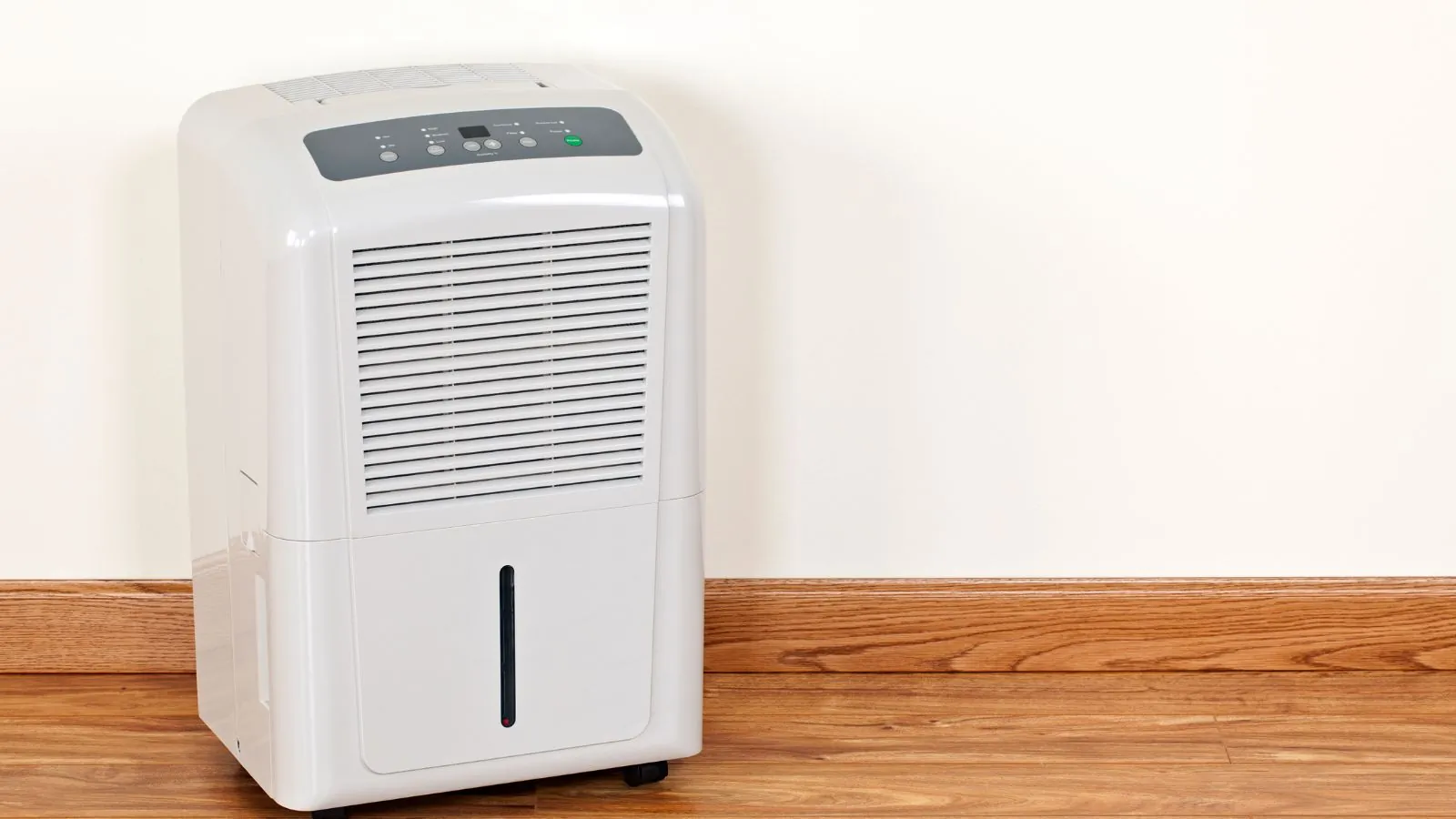
Structural drying and dehumidification is the process of drying a building after water gets in. It is the step that follows extraction and the part most people skip, which is why damp smells and warped floors show up weeks later. Water mitigation is the trade name for the first stage of this work.
On this page we explain what the drying involves, how long it normally runs and how you know it is finished. The short version is that drying is measured, not guessed, and the measurement is documented.
Drying equipment and what it does
| Equipment | What it does | Where it is used |
|---|---|---|
| Moisture meters | Read moisture in drywall, wood and concrete | Every wet room, at each visit |
| Thermal imaging camera | Shows temperature differences that point to wet areas | Walls, ceilings and floors |
| Air movers | Push air across surfaces to evaporate water | Floors, wall bases and ceilings |
| LGR dehumidifiers | Remove moisture from the air so drying continues | Closed rooms and whole floors |
Why is my wall still damp?
A wall can feel dry on the surface while the cavity behind it holds water. Drywall wicks moisture upward, insulation traps it, and baseboards hide it. If a room smells musty after a leak, or paint bubbles days later, water is probably still in the structure. That is the reason moisture meters and thermal imaging are used rather than touch.
Drying is a controlled process. Equipment is placed on a plan, readings are taken at the start and during the job, and equipment is moved as areas dry. That is the difference between a fan in the corner and structural drying.
Water mitigation: the first stage of drying
Water mitigation is the early stage that limits damage. It includes stopping the source, removing standing water, removing materials that cannot be dried and setting drying equipment. The goal is to keep the loss from growing while the structure dries. Mitigation records, including photos and readings, form the start of the documentation for your insurer.
Wet walls or floors? Call the 24/7 line.
Call (833) 521-1033How long drying takes
Many residential jobs reach dry standard in three to five days, though dense materials, hardwood and plaster can take longer. The crew sets a drying goal for each material at the start and compares daily readings to it. When every reading reaches the goal, drying is finished.
Moving equipment on and off a job is part of the plan. When walls are dry, the dehumidifier moves to the next wet area.
Equipment is used on the job, not rented
Callers sometimes ask to rent air movers or dehumidifiers. We do not rent equipment out. Drying works when someone reads the moisture and moves the equipment, so the equipment is placed and monitored by the crew. Renting a machine without readings can leave water in the structure.
When drying meets repair
After drying, the repair phase replaces what had to come out. For walls and baseboards, see wall and drywall repair. For floors, see hardwood floor repair and carpet restoration. Drying comes first because new materials installed over wet framing can fail.
Drying in Bayside buildings
Single-family houses, garden apartments and co-ops each dry differently. Closed rooms dry faster with dehumidifiers, while large open spaces need more equipment. In a multi-unit building, noise and power are shared, so the crew explains the plan to neighbors who are affected.
Insurance and documentation
Daily moisture logs and equipment records show the work and the dry goals. Ask your insurer what documentation it wants, and ask us for a copy of the logs. We do not promise how a claim will turn out.
Where we serve
Drying work is available for Bayside and the neighborhoods around it.
What affects the cost of structural drying
Drying is scoped by equipment days and area. These are the factors.
| Factor | How it changes this job |
|---|---|
| Affected area | More rooms and square footage need more equipment. |
| Materials | Dense materials like hardwood and plaster dry slowly. |
| Water category | Contaminated water adds cleaning before drying. |
| Equipment days | Each day of equipment time is counted. |
| Monitoring visits | Readings continue until dry goals are met. |
Ask for the scope in writing. Your real number comes from the on-site assessment, so call (833) 521-1033 to start one.
Common questions
How do I know drying is finished?
Readings in each material reach the dry goal that was set at the start. Ask for the log.
Can I just run fans at home?
Fans alone move air but do not remove moisture from the structure. Without dehumidification and readings, water can stay inside walls.
Do you rent air movers or dehumidifiers?
No. Equipment is placed and monitored by our crews on the job.
What is water mitigation?
It is the early stage of restoration that stops the source, removes water and sets up drying to limit damage.