
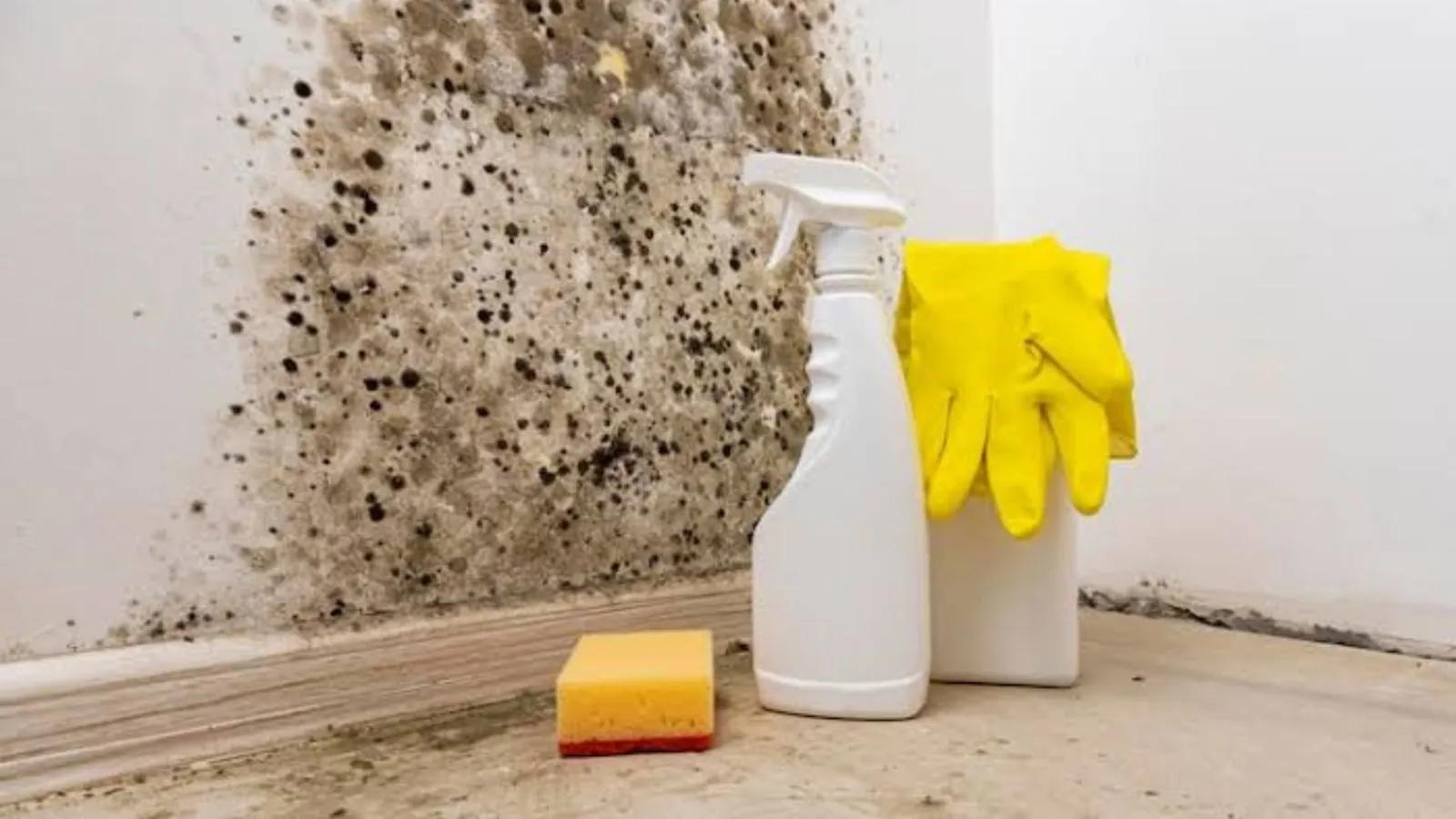
The wet carpet was removed, the floor looks dry and the room still smells like a damp basement. That smell is a clue, not a mystery. Something in the space is holding moisture, and the odor is the first thing you can detect before the cause becomes visible.
This guide explains where the smell tends to come from, how to look for it, what you can safely do and when to bring in meters and a crew. It is general information and not a diagnosis of any particular home.
Water already inside? Call the 24/7 line.
Call (833) 521-1033Why the smell stays
Materials do not all dry at the same rate. Carpet on the surface dries fast. The pad under it, the subfloor, the bottom of the drywall and the insulation inside a wall hold water much longer. If those layers stay damp, microbial growth can begin, and the musty odor comes from the compounds that growth gives off.
Where to look first
| Place | Why moisture hides there | What to check |
|---|---|---|
| Behind baseboards | Water wicks up from the floor into the wall base | Remove a section and look and smell |
| Under carpet and pad | Pad holds water long after the top dries | Lift a corner and feel the pad and tack strip |
| Inside a wall cavity | Insulation and paper facing stay damp | Meter readings, thermal imaging |
| Under cabinets | Closed space with little airflow | Remove the toe kick and check |
| Basement corners and crawl spaces | Cool surfaces and humid air | Check humidity and any dampness on the walls |
What you can do right away
Do not cover the odor with sprays or paint. Masking it hides the signal and leaves the moisture in place.
- Open windows and run fans if the outside air is drier than the inside air.
- Use a dehumidifier in the room and empty it often.
- Pull out wet items that have not dried, such as rugs, cushions or cardboard.
- Look in closed spaces such as closets and under sinks.
- Keep a note of where the smell is strongest.
When to get meters involved
If the smell persists after a day or two of airflow, or if walls feel cool or damp, a crew can take moisture readings and use thermal imaging to find wet materials that cannot be seen. Readings tell you whether a wall is dry, and the answer replaces guessing. See structural drying and dehumidification for the process, and wall and drywall repair if a section has to be opened.
Need help with wet materials? Call the 24/7 line.
Call (833) 521-1033Mold, in plain terms
Visible mold, dark spotting or a persistent odor after a leak should be taken seriously, but not with panic. The first step is fixing the moisture, because mold cannot grow without it. Small areas on hard surfaces can often be cleaned by the owner following public guidance. Larger or hidden growth is a job for licensed professionals. We handle water damage restoration, and where mold work is needed, it is a separate licensed trade.
Who does what
A plumber stops the leak. A restoration crew dries the structure and removes materials that cannot be dried. A licensed mold professional handles mold assessment and remediation where the law requires it. Keeping these roles separate keeps the scope honest.
Keep a simple log while you wait
While you decide what to do, write down where the smell is strongest, what time of day it is worst and whether it changes with the weather or with the dehumidifier. If a bucket of water collects in the dehumidifier every day, moisture is still coming from somewhere. If the collection slows and the smell fades, drying is working.
That log is useful to a crew and to an insurer. It shows that you noticed early, acted and kept track, and it helps pinpoint the area to measure first.
Prevent the smell from coming back
After the structure is dry, keep indoor humidity in a comfortable range, run exhaust fans in bathrooms and kitchens and fix small leaks promptly. Keep stored items off basement floors and away from exterior walls. A small hygrometer costs little and shows you the humidity at a glance, so you can see a damp week coming before it becomes a smell.
What the EPA and New York State say
According to the U.S. Environmental Protection Agency, the key to mold control is moisture control, and wet materials should be dried within 24 to 48 hours to help prevent growth. The EPA also notes that porous materials that stay wet may need to be discarded.
New York State has a mold licensing law in Article 32 of the Labor Law. Under it, licensed professionals are required for mold assessment and remediation on projects above a set size, and the State's guidance describes the threshold as ten contiguous square feet. If you suspect more than a small patch, ask the State's resources or a licensed assessor. Basements near Little Neck Bay, including in Bayside Hills houses that have them, are common places for humidity problems.
Common questions
Does a musty smell always mean mold?
No, but it means moisture is likely present. Moisture is the condition mold needs, so find and dry the source.
Can I just use an air freshener?
No. It masks the smell and leaves the wet material in place.
How long should wet materials take to dry?
The EPA says to dry wet materials within 24 to 48 hours to help prevent mold growth. Hidden layers take longer without equipment.
Do I need a licensed mold professional?
New York's Article 32 requires licensing for mold assessment and remediation above a set size, described by the State as ten contiguous square feet. A restoration crew can tell you when a job may be beyond ordinary drying.