
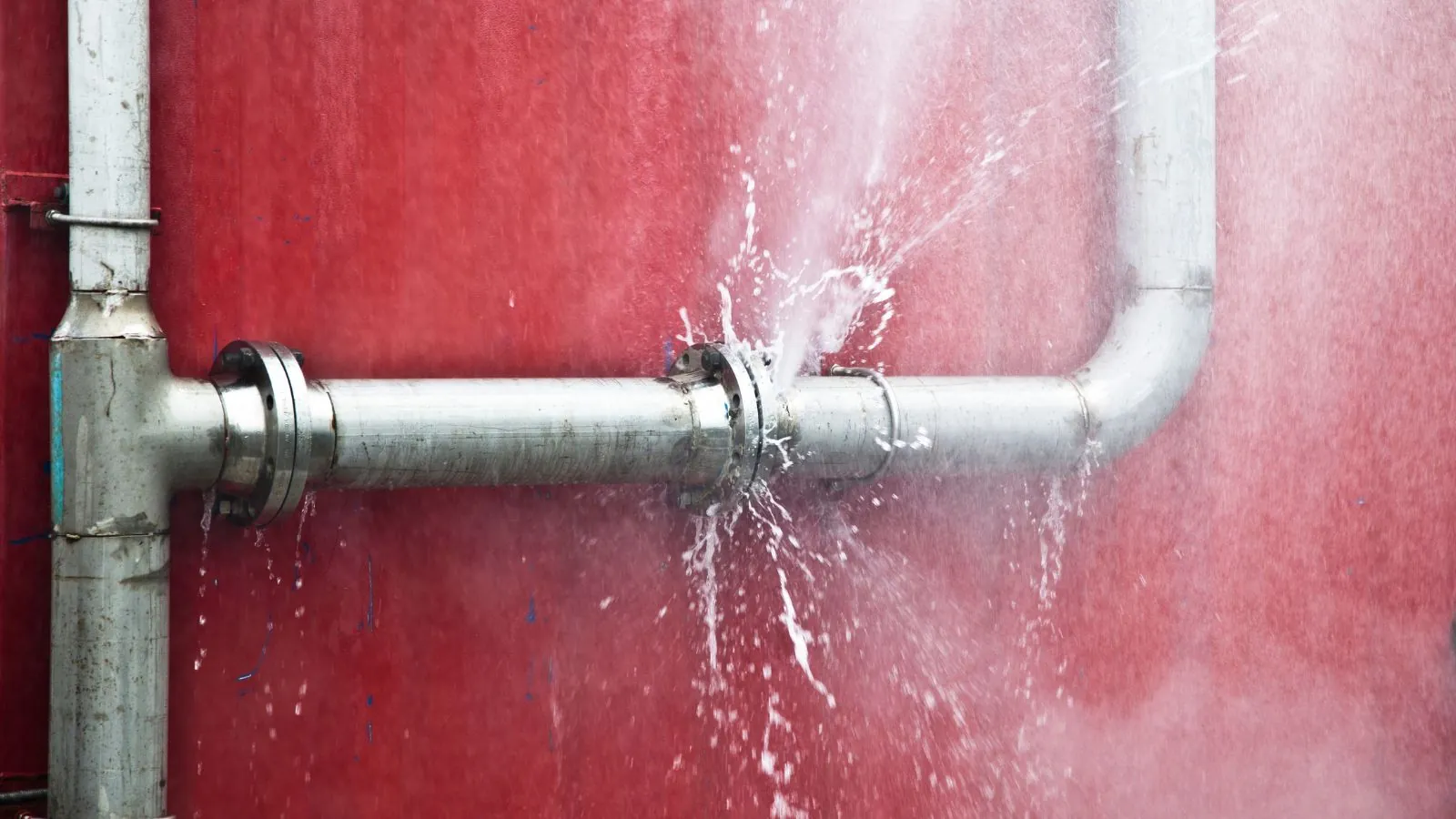
When a pipe breaks, every minute of running water makes the cleanup bigger. The quickest way to limit the loss is to close the main shut-off valve. Many people have never looked for it, and a flooding kitchen is a poor time to start.
This guide explains where to look, how the common valve types work, what else you can shut off and what to do once the water has stopped. It is general information. Every building is plumbed a little differently, so take ten minutes this week to find your own.
Water already inside? Call the 24/7 line.
Call (833) 521-1033Where the main usually is
In most houses, the main shut-off valve is where the water line enters the building, often in the basement or a utility room, near the water meter. In a house with a slab, it may be in a utility closet, a garage or near the water heater. In a co-op or condo, there may be a building main and separate valves for risers, with only some valves under a unit owner's control.
Trace the line from the meter. The valve is usually on the building side of the meter, within a few feet.
Types of valves
| Valve | How it looks | How to close it |
|---|---|---|
| Gate valve | A round wheel handle | Turn clockwise until snug, which can take several turns |
| Ball valve | A lever handle | Turn the lever a quarter turn so it sits across the pipe |
| Fixture stop | A small oval handle at a sink or toilet | Turn clockwise to close |
Test it before you need it
An old gate valve can seize or break when forced. Once a year, turn it gently closed and open again. If it will not move, or if it leaks around the stem, call a plumber to replace it before there is an emergency. Label it with a tag so that anyone in the house can find it quickly.
Steps in an emergency
- Close the main shut-off valve.
- Open a low faucet, such as a basement tap, to drain the remaining water in the pipes.
- If water is near electricity, stay away and, if safe, turn off power to the area at the panel. Call 911 for an electrical risk.
- Photograph the source and the wet areas before you start cleanup.
- Call a plumber for the repair and the 24/7 line for water removal and drying.
Need help with wet materials? Call the 24/7 line.
Call (833) 521-1033Other shut-offs worth knowing
- Fixture stops under sinks and behind toilets.
- The washing machine supply valves, which can be closed when you leave for a trip.
- The water heater cold inlet valve.
- An outdoor spigot shut-off inside the house, for winter.
- The gas shut-off, which should only be handled as the utility advises.
After the water stops
Stopping the supply stops new water, but the water already on the floor and inside walls is still there. Extraction and drying should start quickly. See water extraction for what happens first, and burst pipe water damage for the cleanup side of a failed pipe.
Practice once, then label it
Set aside ten minutes on a calm day. Walk to the valve with everyone in the household who is old enough to use it. Close it, open a faucet to confirm the water stops, then open the valve again and let the faucet run until the water is steady. Doing this once turns a vague idea into a skill, and it tells you whether the valve works.
Then label it. A bright tag or a printed card on the wall nearby, with an arrow and the words main water shut-off, helps a guest, a babysitter or a neighbor who has to act while you are out. Note the location of any other valves in a short list on your phone.
If the valve is stuck, leaks around the handle or is behind stored boxes, fix that now. A valve that cannot be reached or turned is not a safety device. A plumber can replace an old gate valve with a quarter turn ball valve, which is easier to close in a hurry.
If the valve will not close
A valve that will not turn is a reason to escalate, not to keep forcing it. Close the nearest fixture stops if the leak is at one fixture, turn off the water heater supply if the tank is the source and call a plumber. In a co-op or condo, call the super or managing agent, who may be able to close a riser valve for the building. Do not use a wrench with a long handle on an old gate valve, since the stem can snap and make the problem worse.
What belongs to the city
As a general guideline, NYC Department of Environmental Protection operates the water system up to the property line and the meter is part of the city's billing equipment. The valve that you control is the building's shut-off on your side of the meter, and valves in the street belong to the city and should be left to DEP crews.
If you live in a co-op or condo, such as in Bay Terrace, ask your managing agent for the building's shut-off plan, including who has the key to the riser valves, so you know whom to call first.
Common questions
Where is the main water shut-off in a house?
Usually where the water line enters the building, near the meter, in a basement, utility room or garage.
Which way do I turn a gate valve to close it?
Clockwise, until snug. A ball valve has a lever that closes with a quarter turn.
Should I open a faucet after closing the main?
Opening a low faucet helps drain the remaining water in the pipes and relieves pressure.
Can I operate the valve in the street?
No. Street valves belong to the city and should be left to NYC DEP crews.