
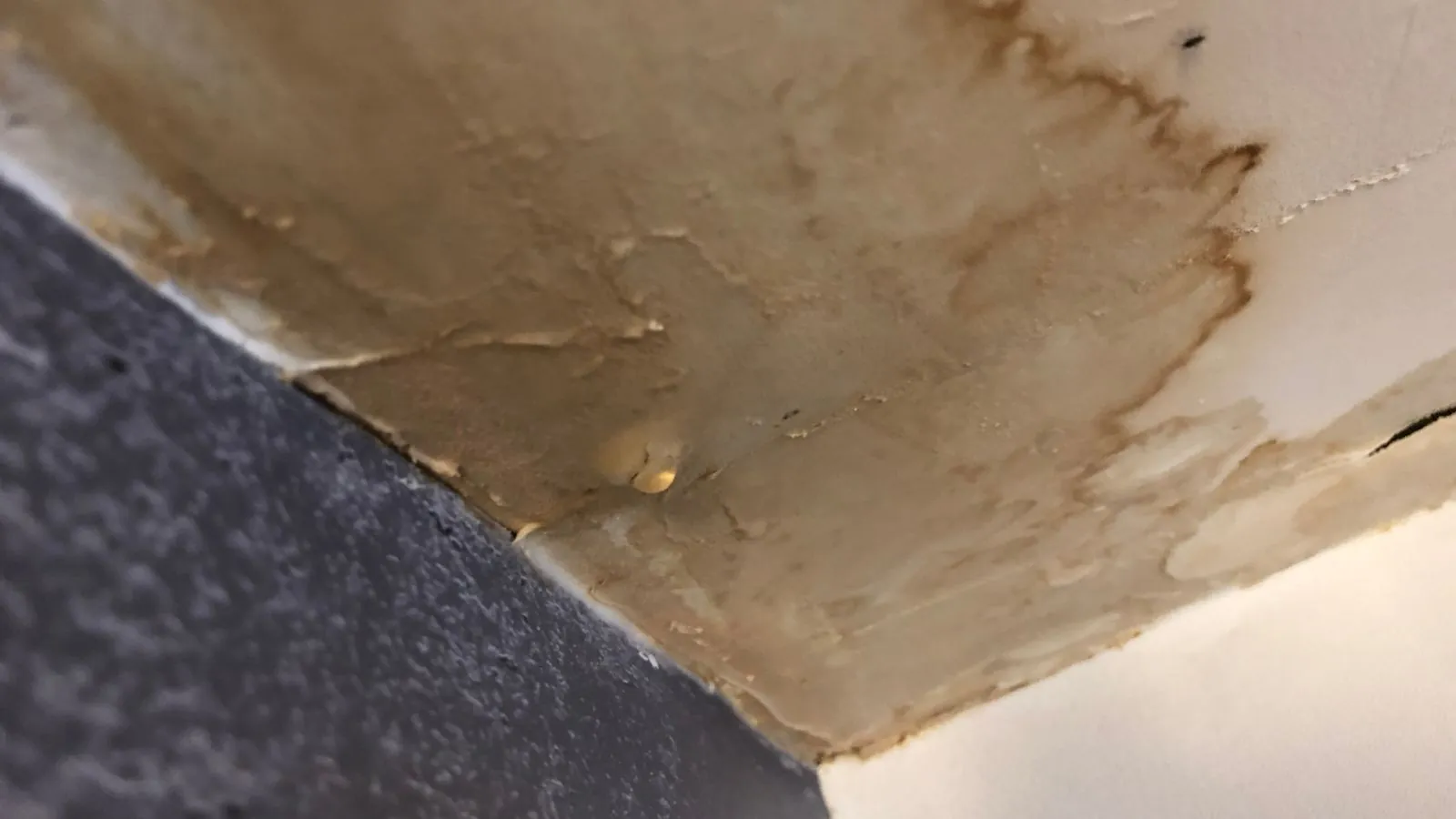
A scope of work is the document that lists what a restoration company will do. It can be intimidating because it uses trade terms. Most of the terms describe ordinary steps, and once you know them the document becomes easy to follow.
This guide goes through the common terms and the structure of a scope. Use it to read your own scope and to ask good questions before you sign.
Water already inside? Call the 24/7 line.
Call (833) 521-1033The usual structure
Most scopes follow the order of the job: emergency services, then demolition or removal, then drying, then cleaning, then repairs. Some insurers use their own forms, but the order stays about the same. If your scope is not in an order that makes sense, ask the author to walk you through it.
Terms in the emergency and removal phase
| Term | What it means |
|---|---|
| Extraction | Removing standing water with pumps and extraction units |
| Flood cut | A cut across the bottom of a wall that removes wet drywall so the cavity can dry |
| Controlled demolition | Removing wet materials that cannot be dried, such as saturated pad or drywall |
| Containment | Plastic barriers that keep dust or contaminants from spreading |
| Pack-out | Moving belongings out of the area, sometimes into storage |
Terms in the drying phase
| Term | What it means |
|---|---|
| Air mover | A fan that moves air across wet surfaces |
| LGR dehumidifier | A dehumidifier that removes moisture from the air efficiently at low humidity |
| Moisture mapping | Recording moisture readings across rooms and materials |
| Dry standard | The target moisture reading for a material |
| Equipment days | The number of days each machine runs, which affects cost |
Need help with wet materials? Call the 24/7 line.
Call (833) 521-1033Classes and categories
ANSI/IICRC S500 describes water by category, which is about contamination, and by class, which is about how much water and how many materials are involved. A scope that names both tells you how the company judged the job. If it names neither, ask. The category affects safety, and the class affects equipment.
Repair terms
Repair lines often use words like replace, patch, texture, prime and paint. Ask what is being matched and what is not. Matching a ceiling texture or a floor finish can be difficult, and a scope should say how it will be handled. See ceiling water damage repair for an example of how repair lines work.
Questions to ask about any scope
- Which rooms and materials are in the scope, and which are not?
- How many equipment units and how many days are planned?
- How will moisture be read and when will I see the logs?
- What happens if the opened wall shows more damage?
- What is excluded, such as plumbing repair or mold work?
A short example of how a scope reads
Imagine a kitchen where a supply line failed under the sink. A reasonable scope might list extraction of standing water and removal of the wet toe kick and cabinet base. It might add a flood cut at the adjoining wall and antimicrobial treatment of the open cavity. Then it names the drying equipment, the number of days and the daily moisture readings. After that come the repair lines: new drywall, baseboard, paint and any cabinet work.
Most scopes are longer than this, but the pattern holds: a cause, a set of removal and drying steps with equipment and days, and then the rebuild. Read that list and ask three questions about each line. What is being done, where is it being done and how will you know it was done? A line that cannot be answered in those terms is a line to ask about before you sign, and the answer is worth writing next to the line so that the final paperwork matches what you were told.
Quantities
Look for measurements such as linear feet of drywall to be cut or square feet of floor to be dried. They make a scope comparable and checkable.
Allowances
Some scopes carry an allowance, a set amount for an item that is not yet chosen. Ask what happens if the real cost is higher.
Photos and logs
Ask when you will receive photographs and moisture logs. A scope that promises them in writing is one you can follow.
Emergency work and the city
The NYC Department of Buildings says that licensed contractors can start emergency repairs before a permit is issued, and that an Emergency Work Notification must be filed within two business days after the work is completed. That rule applies to work the Department regulates, so ask who will file it if your job includes such work.
In an apartment building or a co-op like those in Bay Terrace, ask the managing agent whether the building has its own approval process for work inside a unit.
Common questions
What is a dry standard?
It is the target moisture level for each material. The job is done when readings reach it.
What is a flood cut?
A cut across the bottom of a wall that removes wet drywall so the cavity can dry.
Why are there so many equipment days?
Each machine runs for a set number of days. The number comes from readings and the size of the area.
Does emergency repair need a city permit in New York?
The Department of Buildings says licensed contractors can begin emergency repairs before a permit is issued and must file an Emergency Work Notification within two business days after completing the work.