
Water damage is one of the most common problems found in older homes, and it is often invisible to a casual visitor. A fresh coat of paint can hide a stain for a season. A dehumidifier can hide a smell for a week. But water leaves clues, and you can learn to look for them.
This guide gives a walk-through for a showing, a list of questions for the seller and the agent, and the checks to ask a home inspector to make. It is general information and not a substitute for a licensed inspection.
Water already inside? Call the 24/7 line.
Call (833) 521-1033At the showing: look up, down and sideways
- Ceilings, especially under bathrooms and on top floors, for stains, rings or fresh patches of paint.
- Walls near windows and in corners for bubbling, peeling or discoloration.
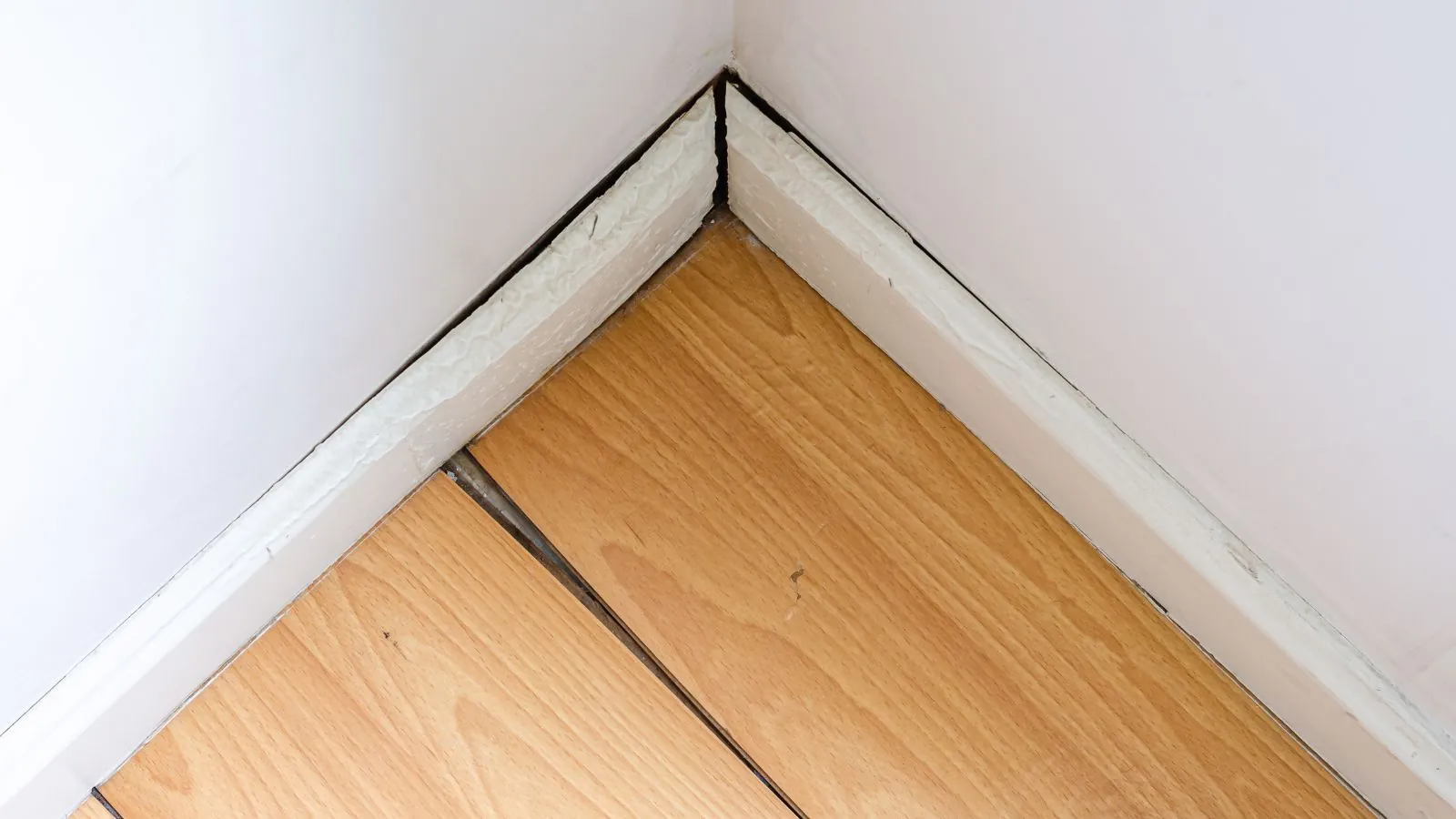
- Floors for warping, cupping, soft spots or gaps between boards.
- Baseboards and trim for swelling or separation.
- Under sinks and around toilets for corrosion, dampness or fresh caulk.
- The basement for tide marks, efflorescence, rust on the bottom of metal posts and a sump pit.
Use your nose and your hands
A musty smell in a closed room suggests moisture. A strong air freshener or a lot of candles can be a cover for it. Touch the base of walls, feel carpet near exterior walls and notice whether a basement is dehumidified unusually hard. None of these prove damage, but each is a reason to ask a question.
What the signs can mean
| Sign | Possible meaning | Follow up |
|---|---|---|
| Brown ring on a ceiling | Past or active leak above | Ask about plumbing and roof history |
| White powder on basement walls | Moisture moving through masonry | Ask about drainage and past water |
| Cupped or buckled floor | Moisture below or beside the floor | Ask for a moisture reading |
| Fresh paint in one patch | Cover for a stain | Ask when and why it was done |
| Musty smell | Hidden dampness | Ask the inspector to test |
Questions to ask the seller
- Has the house ever had a leak, flood or sewer backup?
- What was repaired, when and by whom, and do you have records?
- Has there been an insurance claim for water?
- Does the basement take on water in heavy rain?
- Is there a sump pump, and has it ever failed?
Need help with wet materials? Call the 24/7 line.
Call (833) 521-1033What a home inspector can add
A good inspector brings a moisture meter and often a thermal camera. Ask them to take readings at the places you worried about and to check the roof, flashing, gutters, grading and plumbing for signs of past or active leaks. If they find something, a restoration or plumbing specialist can say how large it is. Our page on structural drying shows what moisture mapping looks like.
Flood and back-up history
Ask about flood and drain backup specifically, because they are different from roof or plumbing leaks and need different insurance. Ask an insurance agent what flood or back-up coverage costs for the address before you commit, since it can affect your monthly budget.
If the inspection finds damage
Damage is not always a reason to walk away. It is a reason to understand it. Get a written description of the cause, the extent and the repair, and use it to decide whether to renegotiate, ask for repairs or move on. For what repairs involve, see wall and drywall repair and hardwood floor repair.
Take your own notes and photos
Bring a phone and take photos of anything that raises a question, along with the room and the date. A stain that looks small on a showing can look different beside your photo of it a week later, and a list of questions made on the spot is easier to hand to an inspector than a vague memory.
If you go back for a second visit, go at a different time of day and, if you can, after rain. A basement that smells fine on a dry afternoon can smell very different after a wet night, and a ceiling stain can look darker when the light comes in from another angle.
Using the city's flood maps and New York's disclosure form
The NYC Department of City Planning publishes a Flood Hazard Mapper that lets you look up an address. NYC Emergency Management publishes hurricane evacuation zones, which the agency says are not the same as FEMA flood zones. Check both for any Bayside address you are considering, particularly near Little Neck Bay.
For one to four family homes, New York's Property Condition Disclosure Act has sellers either deliver a disclosure statement or give a credit to the buyer at closing, and the form asks about water and moisture. According to the Department of State's guidance, the form is a statement of what the seller knows and not a warranty, so read it carefully, and for a co-op in an area like Bay Terrace, ask for the building's financials and any history of leaks or assessments.
Common questions
What are the signs of past water damage?
Ceiling rings, bubbling paint, warped floors, efflorescence on basement walls and fresh paint on one patch are common clues.
Can a seller hide water damage?
Sellers can paint over stains, which is why meter readings and records matter. In New York, sellers of one to four family homes deliver a disclosure statement or give a credit.
Should I check flood maps before making an offer?
Yes. Look up the address in the NYC Flood Hazard Mapper and on the hurricane evacuation zone finder, and ask an insurance agent about coverage.
Who should I hire if the inspection finds moisture?
A plumber for a leaking pipe, a roofer for a roof leak and a restoration company for drying. The inspector can point you in the right direction.